Chord family · 24 shapes
Sixth chords
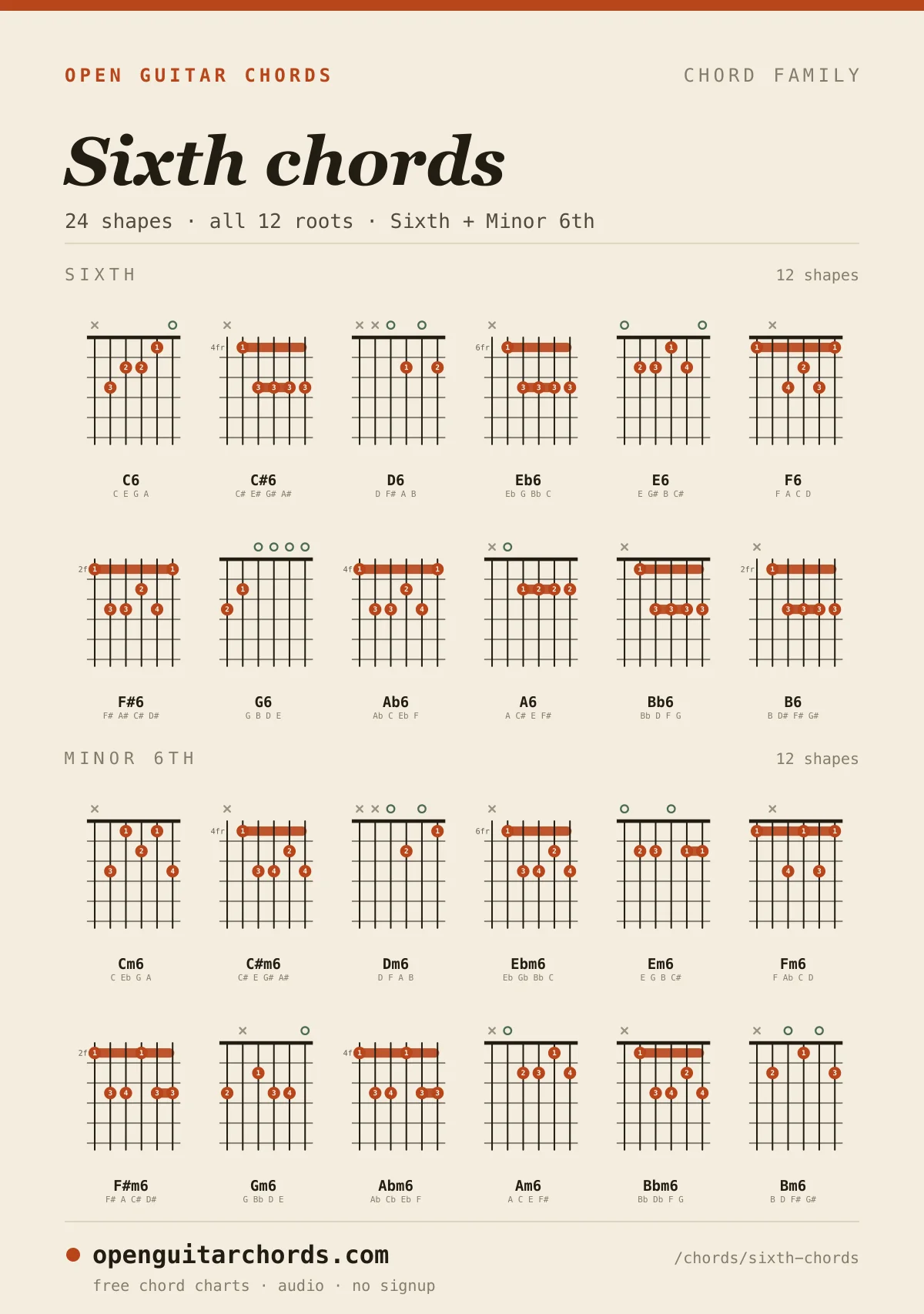
Sixth chords add the sixth scale degree to a triad. On guitar they are unusually easy, because the sixth is often already there in the open position — C6 is C with one finger moved, and G6 is G plus a single note on the high E string.
They sound warm and slightly old-fashioned: big-band swing, 1950s ballads, and the twangy rhythm parts of early rock and roll. Where a plain major chord would sound too final, a 6th keeps the music moving.
Sixth
12 shapes · 2 with their own pageMinor 6th
12 shapesHow to use sixth chords in a song
That is the whole idea behind the family. A triad ending a phrase says "finished"; the same chord with a sixth on top says "and then…", which is why sixth chords cluster in the last bar of a swing tune and in the intros of early rock records, where the band wants the listener leaning forward.
Minor sixth chords are a different colour entirely: film-noir, melancholy and jazzy. Try ending a minor progression on a m6 instead of the plain minor chord and listen to the mood change. The classic move is to slide a m6 shape down two frets to make a m7, which is the sound of every noir soundtrack ever written.
The one thing to watch is the added note itself. Because the sixth is usually the highest note you play, it is also the first to disappear if a finger rolls flat, and a sixth chord missing its sixth is just a plain triad with a duller top string. Check the top string separately before you blame the shape.
The family is large — 26 shapes across major and minor sixths — but 6 of them are open-position and the rest are barre shapes you will already know from other families. Learn the two open shapes you meet most often, C6 and Am6, and the rest of the page becomes a reference rather than a study plan.
If you only try two of the shapes on this page, try Cm6 and C#6: both can be reached from shapes you already know, so the change stays playable at speed. Listen to the chord that follows it in the loop — the resolution is the point of the chord, not the chord itself.
How to practise sixth chords
- Play C, then C6, then back to C. Only the finger adding the sixth moves. Keep the rest of the shape still and listen to the top string.
- End a phrase on Am, then end the same phrase on Am6. The minor sixth is the whole mood change in one note.
- Slide a m6 shape down two frets to make a m7, then back up. That two-fret slide is the noir sound, and it works from any m6 shape on this page.
Sixth chords in real songs
Sixth chords turn up wherever a song wants vintage colour rather than a plain triad. Three charts on this site use them:
- Georgia on My Mind: opens on C6 and slides to Cm6 in the same phrase, which is the major-to-minor sixth move in its purest form
- Bye Bye Blackbird: a jazz standard built on C6 and Cm6 as home chords rather than passing colours
- The Boxer: uses a G6 as a passing chord between G and the next change
Printable family chart
Sixth chords with their own pages
These are the ones that turn up often enough in songs to deserve a full page — fingerings in every position, real progressions, and the songs that use them.