What chord is this?
Tap the frets you are holding and the reverse chord finder names the chord, with the diagram, the notes and the sound.
- chords compared
- 166
- strings read
- 6
- bass note
- detected
- signup
- none
Tap the neck
Two notes or more and the name appears here.
What is a chord identifier?
A chord identifier is a reverse chord finder: instead of typing a chord name to get a shape, you enter the notes you are already playing and the tool returns the name. This one reads the six positions of the neck, converts each one into a pitch, and compares that set of two to six notes against all 166 chords in the library. Matches are sorted into three groups: chords that use exactly those notes, chords that sit completely inside them, and chords that need one more note. When several names fit the same notes, the lowest string decides: E G C is answered as C/E, not C. Naming a shape is worth the ten seconds it takes, because a name unlocks every other voicing of the same chord, the 65 chord pages on this site, and the songs in our library that use it. The comparison runs in your browser, with no signup and no upload.
Learn & referenceExamples, charts and deeper explanation
How do you identify a chord from a shape?
- Note three things about the shape. Which fret each string is pressed at, which strings ring open, and which strings you do not play at all. The third one matters: an unplayed string marked as muted contributes no note.
- Tap the same positions above. Each row is one string, high e on top and low E at the bottom. Tap a fret, O for an open string or × for a string you mute. The reading appears above the neck as you tap, so nothing moves out of view.
- Read the answer, then the alternatives. The largest name is the exact match; Also fits lists complete chords hiding inside your notes, and Close matches are one note short. Open any result for the full page with every voicing up the neck.
What chord is this? Eight worked examples
Real shapes, the notes they contain, and the name the identifier returns for each. Load any row into the neck above to try it yourself.
| Shape | Notes | Answer | Why that name |
|---|---|---|---|
| C E G | C | Root, major third, fifth. A plain triad, so the name carries no suffix. | |
| E G C | C/E | The same three notes as C, but E is the lowest string, so the answer is the first inversion instead. | |
| C E G B | Cmaj7 | B is a major seventh above C. E minor also lives inside these four notes, so it appears under Also fits. | |
| C E Bb | C7 | Bb is a minor seventh, one semitone below the B of Cmaj7. This open shape leaves out the fifth (G), so C7 comes back under Close matches with one note still to add. | |
| C Eb G | Cm | A flat third instead of a major third is the only thing that decides the minor quality. | |
| C F G | Csus4 | The third is replaced by the fourth. Put F on the lowest string instead and the same notes answer Fsus2. | |
| D G A | Dsus4 | A suspended fourth at D, with no third anywhere in the shape to make it major or minor. | |
| C E G B D | Cmaj7 | Five notes, and no five-note Cmaj9 in the library: the tool answers with the largest chord inside them. |
Which shapes do players most often need to name?
Sevenths, suspended chords, added ninths and slash chords are the shapes that most often send a player looking for a name. Each diagram opens the full page for that chord, with every voicing up the neck and the songs that use it.
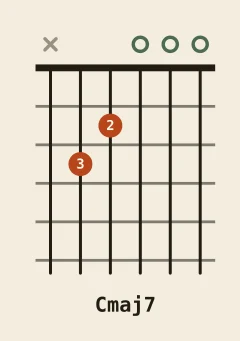
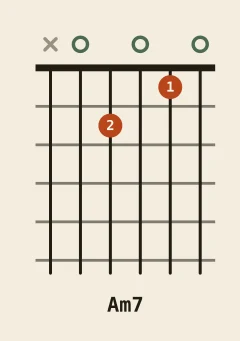
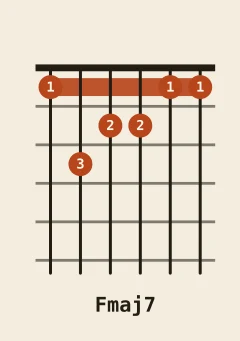
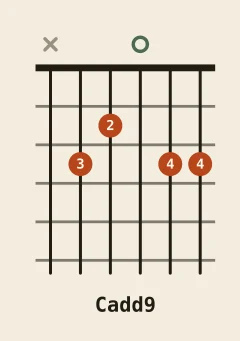
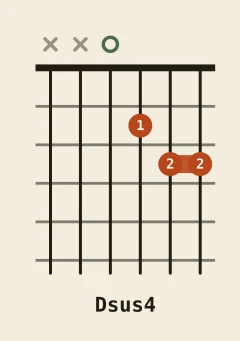
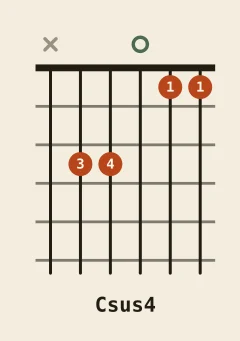
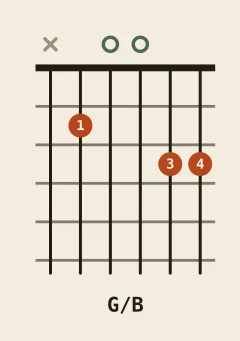
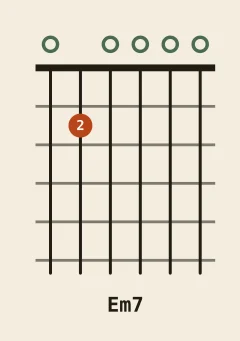
Name the chords you already play
The shapes most players meet first. Each one opens a full page with the fingering, the notes inside it and the songs that use it.